Choosing bathroom tiles sets the tone for style and durability in daily routines. This guide explains popular materials, design ideas, maintenance, and installation tips to help homeowners make informed decisions that last.
Common bathroom tile materials
Ceramic tiles are fired clay tiles that offer broad color and pattern options at an affordable price. They’re great for walls and low-traffic floors, easy to cut, and widely available. For wet areas, choose glazed ceramic with good water resistance and ensure proper grout sealing for longevity.
Ceramic tiles
Ceramic tiles are budget-friendly, lightweight, and available in a vast range of shapes and textures. They work well on walls and backsplashes, and with proper sealing and maintenance, can look great for years.
Porcelain tiles
Porcelain is a denser variant of ceramic with lower water absorption, making it highly durable for floors and shower surrounds. It can resemble stone or wood and typically costs more than standard ceramic.
Glass tiles
Glass tiles add light and a modern, reflective quality to bathrooms. They’re popular as accents, mosaics, or shower niches. Grout lines tend to show mineral buildup more clearly, so regular cleaning is important.
Natural stone tiles
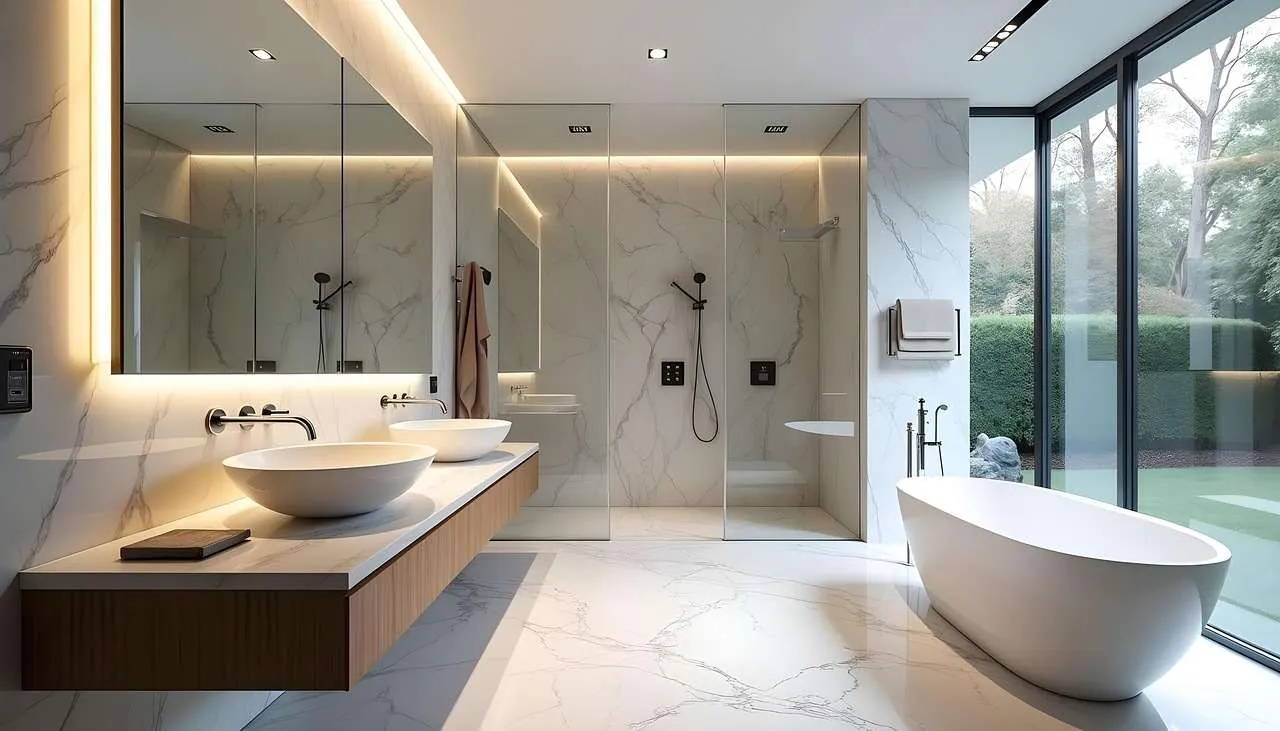
Granite, marble, and travertine offer a premium, unique appearance. They’re porous and require sealing and periodic maintenance to prevent staining and moisture damage. Stone tiles are ideal for feature walls or decorative floors when properly installed.
Cement and cement-look tiles
Cement tiles provide bold patterns and color but require sealing and careful moisture management. They suit contemporary or eclectic bathrooms and age beautifully with patina when cared for properly.
Design and layout ideas
Tile size, pattern, and color shape a bathroom's perceived space. Larger tiles reduce grout lines, making small rooms feel bigger, while smaller mosaics can create texture and visual interest in showers. Mixing materials—large porcelain on the floor with ceramic or glass accents on walls—can elevate a design without overwhelming it.
Style and color decisions
Coordinate tile colors with cabinetry, countertops, and fixtures. Light neutrals brighten rooms; cool grays and blues convey spa-like vibes; while bold patterns in a single feature wall add personality. Use accent tiles to highlight the shower niche or vanity backsplash without cluttering the space.
Performance, maintenance, and waterproofing
Durability and maintenance depend on tile material and grout. Sealing natural stone or cement helps prevent staining, while epoxy grout offers superior moisture resistance in wet zones. Regular cleaning and prompt removal of soap scum extend tile life.
Waterproofing basics
In wet areas, install a proper substrate and moisture barriers, such as cement backer boards, and use appropriate waterproof membrane systems. Proper waterproofing reduces the risk of mold and structural damage over time.
Buying tips and cost considerations
Set a budget that covers tile, underlayment, adhesive, grout, sealing, and installation labor. In general, ceramic tiles are the most economical, porcelain tiles offer mid-range pricing with higher durability, and natural stone or cement options tend to be higher in cost but deliver a premium look.
Cost ranges
Typical price ranges per square foot (materials only) vary by region, but ceramic tiles often run about 1 to 3, porcelain 3 to 7, glass tiles 7 to 30, and natural stone 5 to 25. Labor costs can add significantly, especially for complex patterns or large-format porcelain in wet areas.
Tile installation basics
Working with a professional ensures proper substrate prep, waterproofing, and grout sealing, but DIY can be feasible for small projects with careful planning. Steps include:
- Prepare the surface and ensure it is clean, flat, and dry.
- Install a suitable underlayment or backer board in wet zones.
- Plan the layout with spacers and chalk lines; cut tiles to fit edges and around obstacles.
- Apply adhesive and set tiles, using a tile level system to maintain even surfaces.
- Allow curing, then apply grout and seal where needed; caulk edges to prevent water intrusion.
Comparison of tile types
| Tile Type | Pros | Cons | Ideal Use | Typical Price | Maintenance |
|---|---|---|---|---|---|
| Ceramic | Affordable, versatile, wide selection | Less durable for heavy foot traffic | Walls, light-duty floors | 1–3 | Regular cleaning; grout sealing |
| Porcelain | Dense, water resistant, durable | Higher cost; heavier to cut | Floors, showers, high-moisture zones | 3–7 | Low maintenance; seal stone-specific if needed |
| Glass | Reflects light; modern look | Visible grout; can be slippery on floors | Accents, backsplashes, shower niches | 7–30 | Regular grout cleaning; avoid harsh abrasives |
| Natural stone | Premium, unique character | Porous; requires sealing and maintenance | Showers, feature walls, floors | 5–25 | Seal periodically; avoid acidic cleaners |
| Cement | Bold, patterns, durable when sealed | Moisture sensitive; sealing required | Contemporary bathrooms, accent floors | 6–20 | Seal and reseal as recommended |
Summary: Bathroom tiles offer a wide range of aesthetics and performance. By selecting the right material for each zone, planning layout and waterproofing, and investing in proper maintenance, you can achieve a durable, beautiful bathroom that reflects your style while protecting your investment.